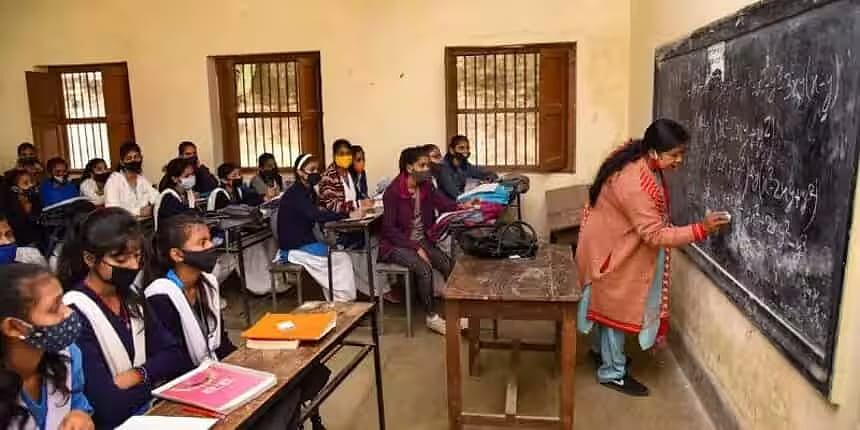
Some of the most meaningful lessons a child learns don’t come from a textbook. They happen at home, around the dinner table, or during an ordinary conversation with a parent.
In Assam, one teacher found a simple way to bring those moments into education. Instead of asking students to learn everything from adults, he encouraged them to take something they had learned at school back home and teach it to their mothers.
His name is Rajesh Bordoloi, a geography teacher at Adarsha Tribal Higher Secondary School in Assam’s Jorhat district. His approach has reached beyond conventional classroom teaching, helping families become more confident with digital technology while encouraging students to take part in addressing social problems in their villages.
It’s a story about education, but perhaps more importantly, it’s about what happens when a teacher understands the people sitting in front of him.
Why this story matters: Rajesh Bordoloi’s “Each One Teach One” initiative encouraged students to help their mothers learn basic literacy and digital skills, including smartphone use and UPI payments. His wider community work also involved awareness campaigns against child marriage.
A teacher who first decided to understand his students
When Rajesh Bordoloi began teaching at Adarsha Tribal Higher Secondary School, he encountered a classroom where language was an important part of everyday learning.
Many of his students belong to the Mising community and speak Mising at home. At school, however, they were expected to communicate in Assamese. Bordoloi realised that asking students to adapt to a new language was only one side of the story.
So he started learning words from them.
It might sound like a small gesture, but it helped create a different relationship between teacher and students. Rather than expecting children to do all the adjusting, he showed that a teacher could also learn from the people he was teaching.
That attitude became part of his wider approach: education should connect with a child’s language, family and everyday surroundings.
When students went home with a different kind of homework
One of Bordoloi’s most interesting initiatives is called “Each One Teach One.”
The idea is straightforward. Students return home and help their mothers develop practical skills that are becoming increasingly important in daily life.
That includes using smartphones, understanding digital services, making UPI payments and learning basic literacy skills. For mothers who have had limited access to formal education or technology, these lessons can make everyday tasks feel less intimidating.

There was a practical reason behind the idea. In the surrounding communities, families involved in farming and selling vegetables increasingly came into contact with traders using digital payment services. Some mothers were still more comfortable dealing in cash and were hesitant about using these tools.
Instead of treating this as a problem that belonged only to adults, Bordoloi saw an opportunity for students to help.
According to reports, the initiative achieved around 30 per cent success in its early period, based on Bordoloi’s estimate. That figure is not the whole story, though. The project also helped some parents see their children in a new way: not only as students who needed guidance, but as young people who could share useful knowledge with their families.
Learning to use a phone can mean more independence
For someone who uses digital payments every day, opening a payment app or checking an online transaction may seem routine. For someone who has never been comfortable with a smartphone, even the first steps can feel complicated.
Having a son or daughter patiently explain the process at home can make that first step easier.

It is worth remembering that digital literacy is not simply about knowing which buttons to press. It also means understanding how to use technology carefully, recognise suspicious requests and avoid sharing sensitive banking information.
That makes the idea of learning together at home especially valuable. It creates room for questions and practice without the pressure of keeping up with a formal classroom.
His students also took a stand against child marriage
Bordoloi’s work did not stop with digital skills.
He noticed that some students were suddenly disappearing from school attendance records. Further inquiries revealed that, in certain cases, girls were leaving school because their families were arranging marriages at an early age.
Teachers and Class 10 students began taking awareness activities into nearby villages. The young people were encouraged to speak with families and community members about the consequences of child marriage and the importance of keeping children in education.
One reported example came from Bhakeli Chapori. The village head later wrote to the school saying that no child marriage cases had been reported there since the awareness campaign began.
That is an encouraging account from the village, although it should not be mistaken for proof that the wider issue has been solved. The important point is that students were given a role in discussing a problem that could directly affect their classmates and their futures.
Recognition came, but the work is bigger than an award
In 2026, Rajesh Bordoloi was selected among the 48 recipients of India’s National Teachers’ Award.
The recognition brought attention to his approach to teaching, but his work is not built around one initiative alone. Reports also describe efforts to connect lessons with local markets, traditional weaving, the surrounding environment and the everyday experiences of students.
His classroom is not limited to maps, geography lessons and examination preparation. It is connected to the community in which his students live.
And that may be the most interesting part of this story. A geography teacher found ways to make learning relevant to digital payments, family relationships, local traditions and the protection of children’s education.
Perhaps the best measure of a teacher is what students carry home
There are plenty of ways to measure a school’s success: examination results, attendance, qualifications and awards. They all have their place.
But there is another measure worth thinking about. What happens when a student leaves school and uses something learned there to help someone else?
In the villages around Jorhat, that question has taken a practical form. A student sits beside their mother and explains how to use a phone. Another joins a conversation about keeping girls in school. Learning moves from the classroom into ordinary family life.
Rajesh Bordoloi’s story is a reminder that good teaching does not always require expensive equipment or complicated programmes. Sometimes it begins by listening to students, understanding their circumstances and giving them the confidence to make a difference.
And sometimes, the next teacher in the family is the child who came home from school.
Sources and further reading
This article is based on published reporting about Rajesh Bordoloi and his work at Adarsha Tribal Higher Secondary School in Assam. The photographs are illustrative images and are not photographs of the teacher, his students or their families.




0 Comments
Join the conversation.